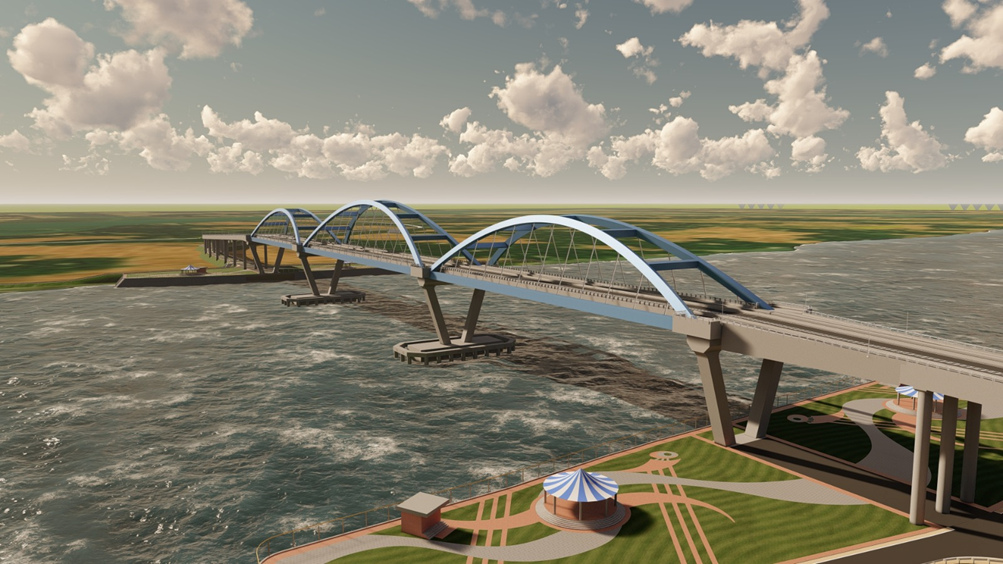
Designing the Nalua Baherchar Steel Tied Arch Bridge
Introduction
As part of an ambitious national initiative, the Government of Bangladesh is focused on constructing vital bridges to replace ferry crossings, ensuring uninterrupted road communication at both national and regional levels. One such project is the Nalua Baherchar Bridge over the Pandab-Paira River, located at the 27th km of the Barishal (Dinerarpool)-Laxmipasha-Dumki Road (Z-8044). This bridge, a commitment of the Prime Minister, aims to significantly enhance connectivity in the region.
Project Overview
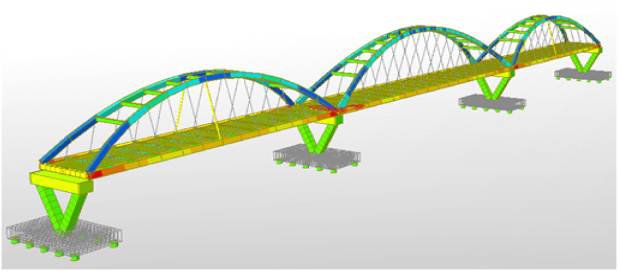
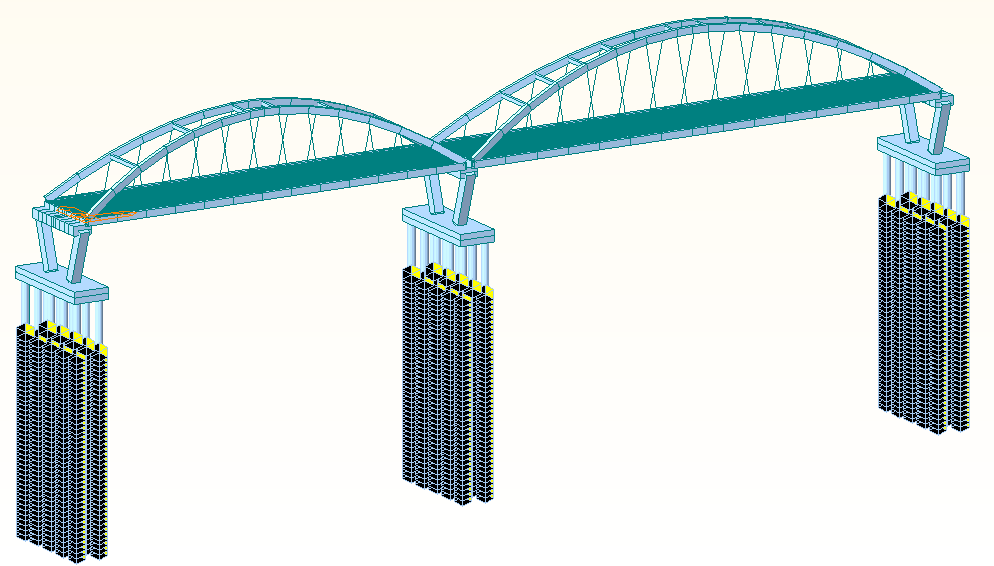
The Nalua Baherchar Bridge project, funded by the OPEC Fund for International Development and the Government of Bangladesh, involves the construction of a steel tied arch bridge with vertical hangers and a reinforced concrete deck. This bridge will connect the existing zilla roads Z-8044 and Z-8806, supported by piers up to 16 meters high. Additionally, the project includes viaducts with 40-meter span PSC-I girders, ancillary buildings, a toll plaza, and various culverts and underpasses.
Design Criteria and Standards
The design and construction of the Nalua Baherchar Bridge adhere to rigorous standards and codes to ensure structural integrity, safety, and longevity. The project employs the AASHTO LRFD Bridge Design Specifications 2020, along with other relevant international and local standards.
Key considerations in the design process include:
- Bridge Configuration: Detailed analysis of the bridge’s structural configuration to optimize load distribution and stability.
- Loadings: Comprehensive assessment of various loads including dead loads, vehicular live loads, wind loads, seismic forces, and temperature effects.
- Materials: Selection of high-quality materials for durability and performance under diverse environmental conditions.
- Substructure and Foundation: Robust design of piers, piles, and pile caps to support the bridge structure and withstand environmental challenges.
Design and Analysis Process
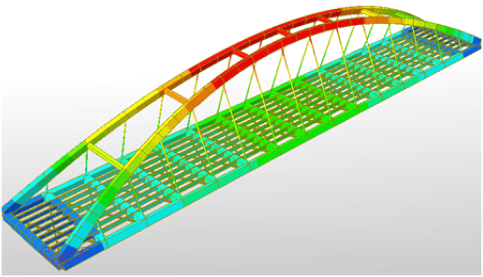
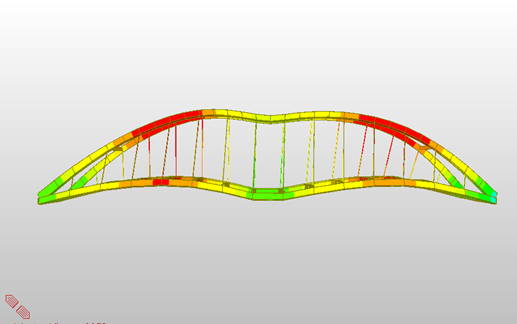
The design process for the Nalua Baherchar Bridge involved extensive modeling and simulation using advanced software tools. This included the creation of 3D finite element models to analyze the structural behavior under different loading conditions. Key steps in the design and analysis included:
- Model Idealizations: Creating accurate representations of the bridge components to simulate real-world behavior.
- Load Combinations: Evaluating various load scenarios to ensure the bridge can handle extreme conditions.
- Deformation Analysis: Studying the deformation patterns of the bridge to identify potential weaknesses and optimize the design.
- Fatigue and Durability: Ensuring that the bridge design accounts for long-term use and environmental factors to prevent material fatigue and degradation.
My Contribution
Working on the Nalua Baherchar Bridge was a significant milestone in my career, marking my first bridge project. I was actively involved in the design and analysis of the bridge, ensuring that all calculations adhered to the AASHTO LRFD Bridge Design Specifications 2020. Alongside my teammates, I prepared a detailed Excel report to document the design process and results, ensuring accuracy and clarity in every aspect of the project.I also helped in the preparation of the Bill of Quantities (BOQ) for this project. This task required meticulous attention to detail and an understanding of the project’s scope to ensure that all materials and resources were accurately accounted for. Contributing to both the design and the BOQ preparation was an enriching experience, allowing me to apply my academic knowledge to a real-world project and contribute to the infrastructure development in Bangladesh.
Conclusion
The Nalua Baherchar Bridge project is a testament to modern engineering and collaborative effort. By adhering to stringent design criteria and leveraging advanced technology, the project aims to provide a durable and reliable infrastructure solution. This bridge will not only facilitate better connectivity but also contribute to the economic development of the region.